
If you feel like everyone around you has suddenly become a perfume expert, you’re not imagining it. India is in the middle of a fragrance boom. A few years ago, most of us survived on deodorant and one “special occasion” bottle. Now it’s clones, “inspired‑by” scents, niche brands, attars, Instagram hauls, and shelves full of glass bottles
That’s exciting, but it’s also confusing. You can spend thousands of rupees and still feel like something is off: too strong, too similar to everything else, or just not worth the price. This blog is a simple guide to what’s actually going on in the perfume industry here, and how to make smarter choices as a fragrance lover.
1. The dupe culture problem: “Like X, but cheaper”
Scroll through any perfume page and you’ll see it:
“Inspired by Aventus.” “Alternative to Baccarat Rouge 540.” “Tom Ford vibes for 1/10th the price.”
Dupes and “inspired‑by” fragrances are not evil. Affordable options can be helpful. The problem starts when copying becomes the whole business model.
- Brands are rewarded for sounding like something already famous instead of creating something new.
- Consumers are trained to judge a scent by how closely it matches an expensive one, not by how it makes them feel.
Result: the market is flooded with “this smells like that” and truly original ideas become rare.
How this hurts you:
You’re paying for a shadow of someone else’s idea, not a fragrance created around your story, mood, or culture.
2. When marketing is louder than the perfume
Today, many perfumes launch like movies: teaser campaigns, celebrity faces, influencer reels, dramatic stories about fantasy cities.
Often, you see the marketing long before you ever smell the perfume. That flips the power:
- The story sells the scent, instead of the scent earning the story.
- Marketing budgets eat the money that could go into better ingredients and better formulas.
You’re not crazy if you’ve bought a beautifully packaged perfume that smelled… fine. It might literally be built that way.
What to watch for:
If the brand can talk for 10 minutes about the “world” of the fragrance but cannot clearly explain the idea, notes, concentration, or how it wears, that’s a red flag.
3. Concentration confusion: EDP, Elixir, 40%… what does it all mean?
EDT, EDP, Parfum, Elixir. 15%, 20%, 40%.
It’s easy to assume: higher percentage = better perfume. The truth is more nuanced:
- Concentration affects strength, but it’s only one piece of the puzzle.
- Performance also depends on the ingredients chosen, how volatile they are, how they’re blended, and even your climate and skin.
- A beautifully built Eau de Parfum can last longer and feel more elegant than a badly made “elixir” that just shouts.
So yes, 40% oil is serious, but only if the structure, ingredients, and intention are there.
What this means for you:
Don’t buy just because a brand screams “highest concentration.” Ask: what’s the idea behind the scent? How is it meant to feel on skin after one hour, four hours, eight hours?
4. The obsession with beast‑mode performance
A lot of fragrance talk online sounds like this:
“Does it last 10 hours?”
“Is it beast mode?”
“Will people smell me from across the room?”
Performance matters. Nobody wants a perfume that disappears in 10 minutes. But when projection and longevity become the only goal, brands start building fragrances that are:
Historically, many legendary perfumes were admired for balance and elegance, not just “loudness”.
Ask yourself:
Do you want a scent that people remember because it was beautiful, or because it was impossible to escape?
5. Luxury price ≠ luxury juice
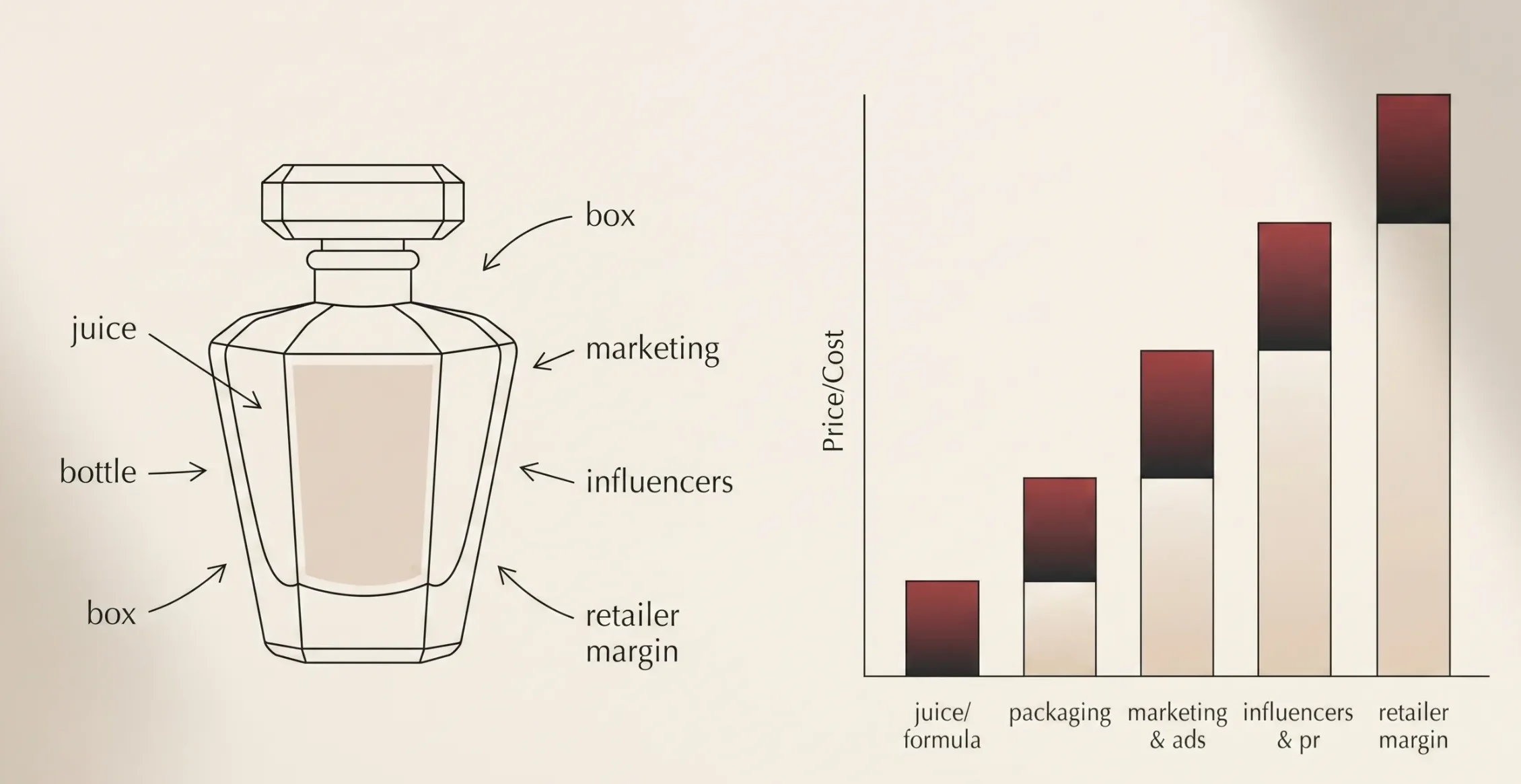
Here’s the uncomfortable truth: that ₹10,000 bottle you’re eyeing does not contain ₹10,000 worth of perfume liquid.
The price also pays for:
- Fancy glass and heavy caps
- Magnetic boxes and special printing
- Retailer margins and commissions
- Ad campaigns, influencer fees, and celebrity deals
- Warehousing, shipping, taxes
None of those things are wrong. But it means price alone can’t tell you how good the actual formula is.
Smart move:
Compare how a scent actually smells and wears on you before assuming “more expensive = better.”
6. Synthetics are not the villain. Hiding them is.
Many people imagine “natural = good” and “synthetic = bad”. Reality: modern perfumery cannot exist without safe, well‑tested synthetic molecules.
They help with:
- Stability and consistency
- Safety (some natural materials are allergenic or unsustainable)
- Creating smells that don’t exist in nature at all
The issue is not that synthetics are used. It’s when brands pretend everything inside is impossibly rare and natural while quietly relying on cheap, generic aroma chemicals.
What you actually want:
Honesty. A brand that can say: “Yes, we use synthetics. Here’s why, and here’s how we think about quality and safety.”
7. India’s forgotten superpower: our own fragrance heritage
This part hurts a little.
India is globally known for jasmine, vetiver, tuberose, patchouli, traditional attars, and rich aromatic craft. Yet a lot of modern perfumes sold here smell like they were designed for a mall in some other country.
We chase “smells like this foreign designer brand” instead of asking:
- What does Delhi at 8 pm after the first rain smell like?
- What does a college canteen crush smell like?
- What does an Indian winter wedding actually smell like?
There is so much story and raw material here. Using it is not about being “ethnic” — it’s about being original.
8. The blind‑buy trap (and why your shelf is full)
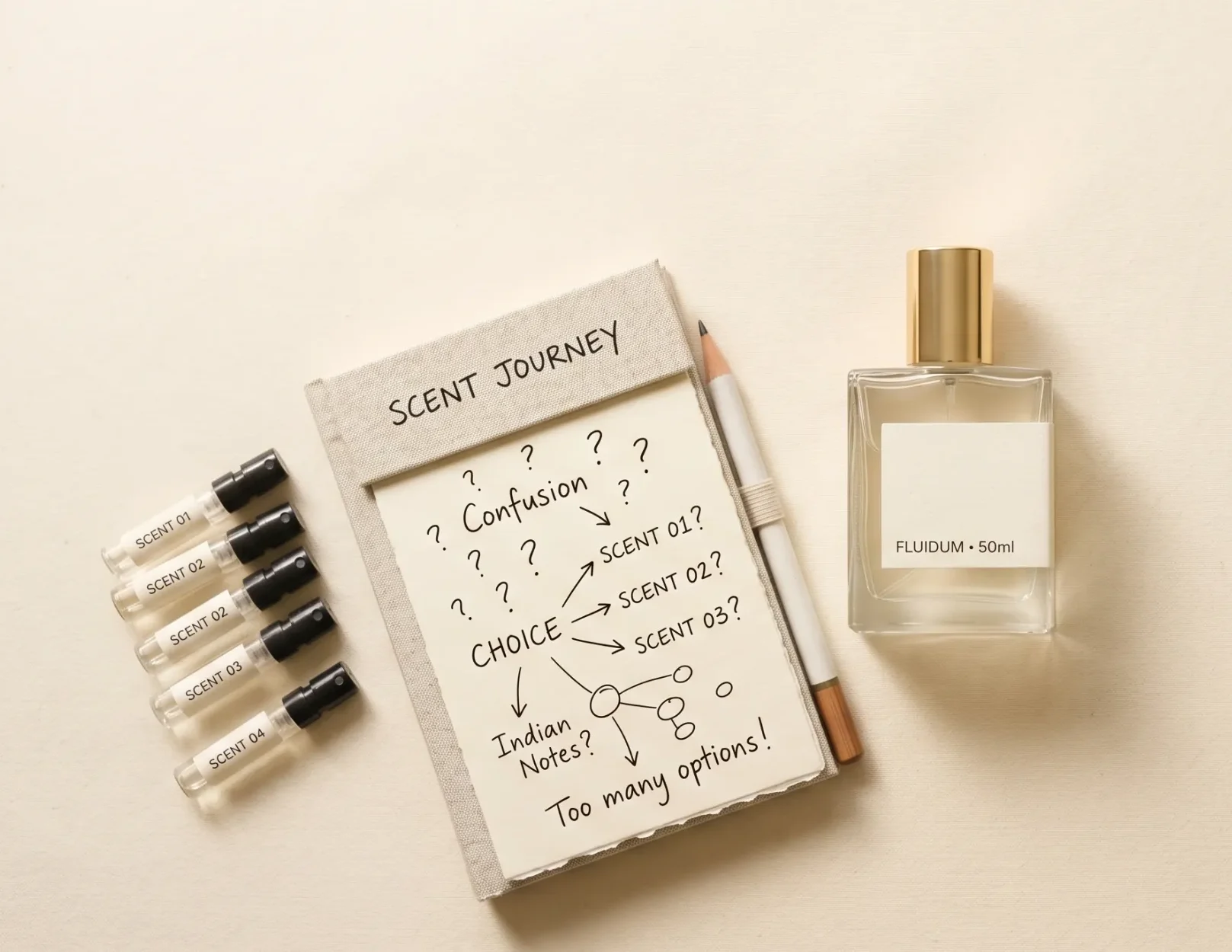
E‑commerce made perfumes easier to buy and harder to understand. It is now normal to:
- Watch a 30‑second reel
- See 3 influencer reviews
- Hit “Add to cart” on a full bottle you’ve never smelled
Sometimes you get lucky. Often, you don’t. That’s how you end up with a shelf full of bottles you “like” but never wear.
Fragrance is personal. Your skin, your taste, your memories, none of that shows up in a YouTube review.
Better rule:
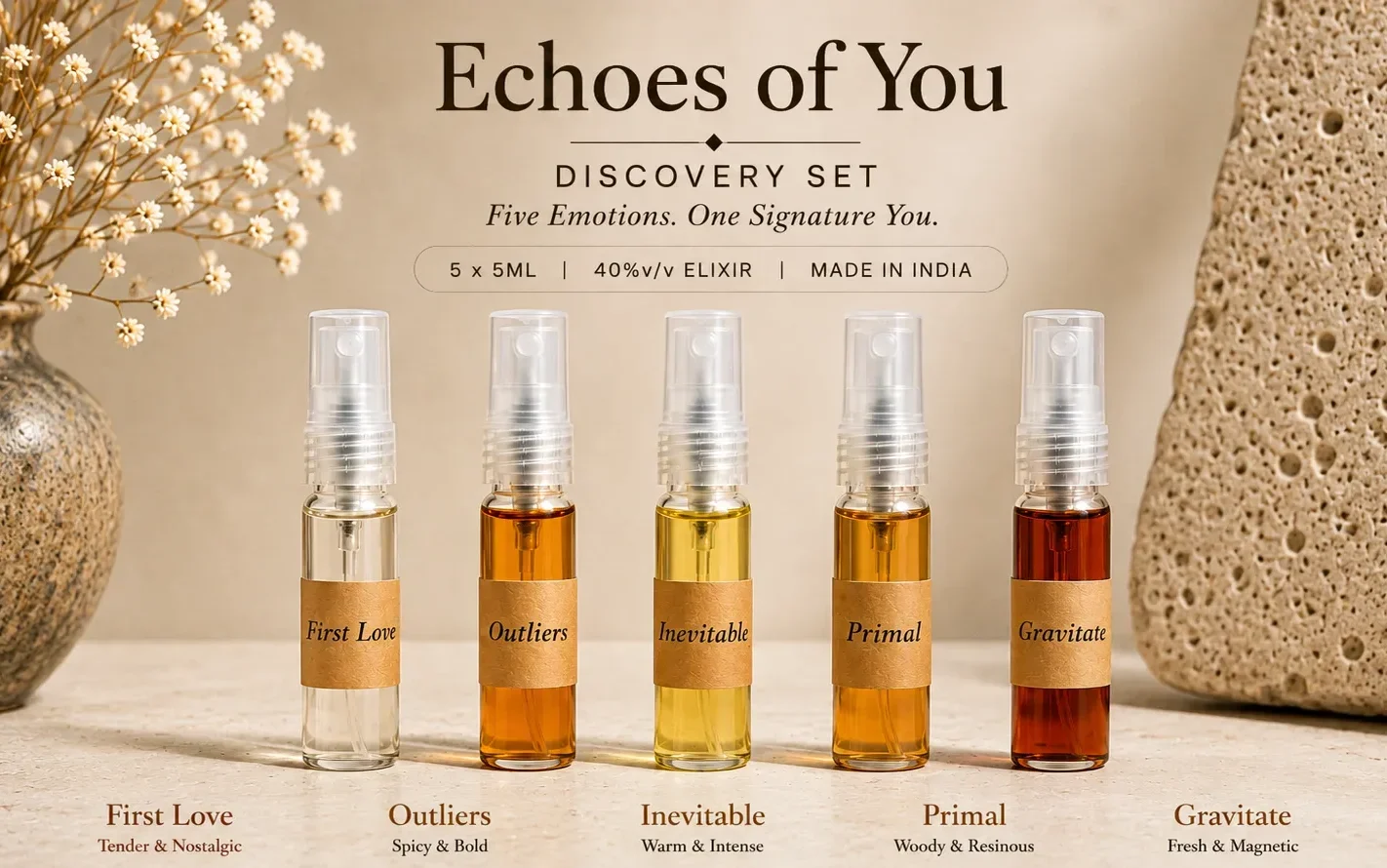
Experience before commitment. Test. Live with it. Then decide. Go for ‘The Sensory Date’ Discovery kit, it is completely free when you decide to buy a bottle of Echoes of You.
9. So what should the future look like?
If you love perfume, the future you deserve looks like this:
- Brands that explain clearly what you’re buying.
- More originality, less copy‑paste.
- Education about concentration and ingredients in simple language.
- Sampling and discovery sets before full bottle commitment.
- Fragrances that respect both performance and wearability.
- More Indian stories and ingredients, not just international templates.
That’s the direction many new, thoughtful houses are trying to move toward.
10. Where The Sensory Date fits into this
Sensory Date (our fragrance line at The Sensory Date) was born directly out of these problems.
We didn’t want to make:
- Another “dupe of a ₹20k designer perfume”
- Another campaign where the story is louder than the scent
- Another bottle you blind‑buy and regret
Instead, our simple rules are:
- Experience before commitment – discovery formats and “try me first” so you can test properly before owning a full bottle.
- Emotion before imitation – we start from lived feelings and memories, not someone else’s bestseller.
- Discovery before ownership – we want you to find the scent that actually feels like you, not just follow a trend.
- Transparency before hype – clear communication on concentration, intent, and philosophy.
India does not need more copycats. It needs more original stories told through scent. If this resonates with you, you’re exactly the kind of person we create for.
Before you buy your next perfume from any brand — ask three questions:
- Is this original, or just “like something else”?
- Do I understand what I’m paying for?
- Have I actually smelled it on my own skin?
If more people start asking these questions, the whole industry will have to get better. And that’s a future worth smelling.